
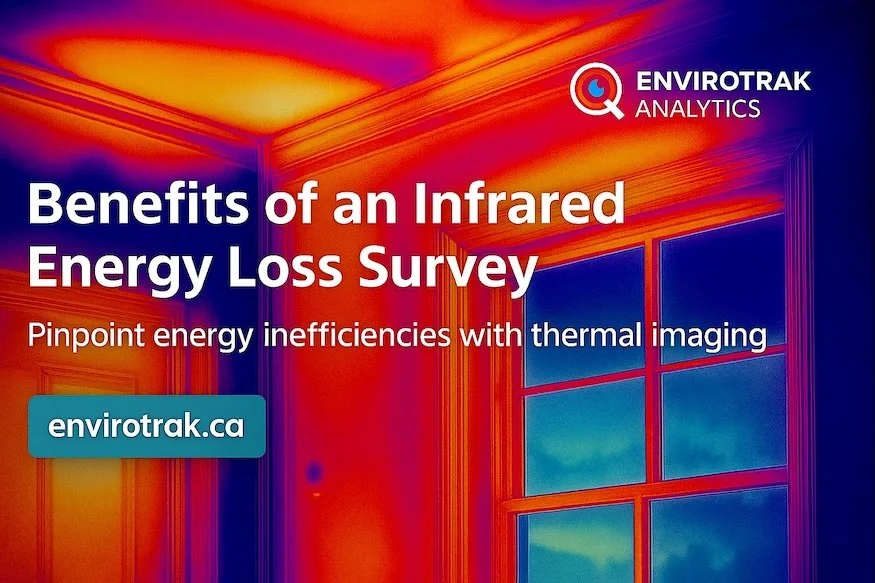
Advantages of An Infrared Energy Loss Survey for Your Home or Building
Heat Loss Is Costing You More Than You Think
Infrared Energy Loss Surveys are one of the smartest ways to uncover hidden inefficiencies in a home or commercial building. Using thermal imaging, we can pinpoint where conditioned air is escaping — long before it turns into higher utility bills or comfort complaints.
If you want to see what your building is really doing behind the walls, this is the place to start. Learn more at envirotrak.ca
Keeping your property energy-efficient isn’t just about saving money (though that’s certainly a perk). Hidden drafts, insulation gaps, and moisture intrusion can quietly undermine indoor comfort, damage building materials, and drive-up utility bills. The challenge? Most of these issues are invisible to the naked eye.
That’s where an Infrared Energy Loss Survey comes in—an advanced diagnostic service that uses thermal imaging to reveal precisely where your building is losing heat or conditioned air. At Envirotrak Analytics Ltd., we use professional-grade infrared cameras to give property owners a clear, science-backed picture of what’s happening behind the walls. Here are the key advantages:
Find Hidden Energy Loss Instantly
Infrared thermography identifies temperature differences across surfaces.
This lets us pinpoint:
Insulation gaps
Air leaks around windows, doors, and framing
Poorly sealed attic hatches
Hidden penetrations around plumbing and electrical lines
Problems that typically require guesswork—or worse, tearing open walls—are revealed quickly and non-invasively.
It’s like giving your building a pair of X-Ray goggles, but without the comic-book side effects.
Reduce Energy Bills (often significantly)
When warm indoor air escapes in winter or cool air leaks out in summer, your HVAC system has to work harder. By identifying and fixing these problem areas, owners often see measurable reductions on their monthly energy costs.
Correcting the issues highlighted during an infrared survey leads to:
Lower heating and cooling expenses
Less strain on equipment (longer lifespan)
Better building performance year-round
Improve Comfort for Occupants
Drafts, cold spots, uneven heating, and inexplicable “hot zones” aren’t mysteries—they’re symptoms. Infrared imaging shows you exactly where these comfort problems originate.
The result?
More consistent indoor temperature
Fewer complaints from tenants or family members
A quieter, more efficient HVAC system that isn’t constantly compensating
Detect Moisture Problems Before They Turn Into Big Repairs
Moisture intrusion often masquerades as energy loss. Wet insulation behaves differently under thermal imaging, making it easier to find early signs of:
Roof leaks
Foundation seepage
Window or flashing failures
Hidden condensation issues
Catching moisture early helps prevent mould growth, indoor air quality issues, and structural deterioration.
Confirm the Quality of Renovations or Upgrades
If you’ve recently upgraded insulation, windows, roofing, or HVAC systems, an infrared survey verifies that the work was done correctly—and that you’re actually getting the performance you paid for.
This is becoming increasingly popular for:
New construction
Post-renovation validation
Pre-purchase inspections
Commercial property assessments
Non-Destructive, Fast, and Ideal for Any Building Type
No drilling. No cutting holes. No shutting down operations.
Infrared surveys can be performed in homes, offices, commercial buildings, and multi-unit properties with minimal disruption. The process is relatively quick, clean, and highly informative.
Creates a Clear Roadmap for Improvements
The final report you receive from Envirotrak Analytics includes:
High-resolution thermal images
A detailed explanation of each identified issue
Specific recommendations for corrective action
Prioritized items based on energy impact and urgency
This turns guesswork into a smart, actionable plan.
Why Choose Envirotrak Analytics?
Envirotrak Analytics is equipped with professional-grade infrared imaging technology—including the FLIR E-Series platforms—paired with certified expertise in building diagnostics and indoor environmental health.
As Certified Infrared Moisture Surveyors and Certified Indoor Air Quality Test Technicians, we don’t just spot heat loss—we interpret what it means for the entire building system.
Final Thoughts
An Infrared Energy Loss Survey is one of the most cost-effective tools available for improving energy efficiency, comfort, and building performance. Whether you’re addressing high utility bills, preparing for upgrades, or simply trying to understand what’s happening inside your walls, thermal imaging provides clarity without the demolition.
If you’re in the Toronto GTA region and want to identify a building’s hidden inefficiencies Envirotrak Analytics can help. Visit envirotrak.ca to learn more or book your survey.
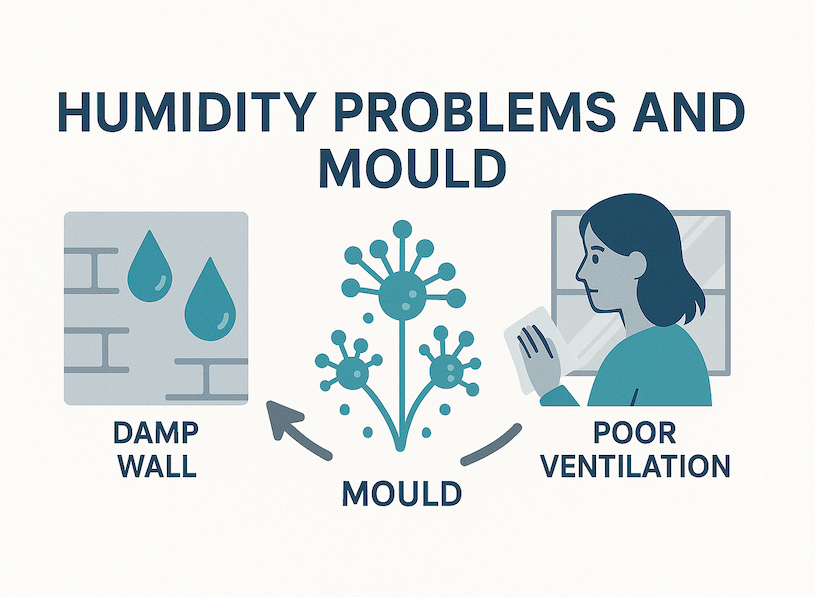
When the Air Feels “Heavy”: How High Humidity Hurts Indoor Air Quality (and How to Fix It)
When the Air Feels “Heavy”: How High Humidity Hurts Indoor Air Quality (and How to Fix It)
Why Humidity Matters
Relative humidity (RH) is more than a comfort factor—it’s a cornerstone of indoor air quality. When RH levels rise above 50–60%, homes and offices become breeding grounds for mould, bacteria, and dust mites. Health Canada and ASHRAE emphasize that excess humidity doesn’t just make a space feel muggy—it directly contributes to poor IAQ and health problems.
Indoor Air Problems Linked to High Humidity
Mould Growth: Damp drywall, carpets, or insulation can quickly host mould colonies. Some moulds produce allergens or even mycotoxins that aggravate asthma, allergies, and respiratory conditions.
Musty Odours & Staining: Persistent dampness leads to odours, peeling paint, and warped wood surfaces.
Allergic & Respiratory Issues: Occupants exposed to mould and dampness often report coughing, wheezing, throat irritation, and worsening of asthma.
Building Damage: Excess humidity can weaken structural materials, corrode metal, and promote rot.
Why Offices and Homes Are Vulnerable
Sealed, Energy-Efficient Buildings: Tightly sealed spaces trap moisture indoors if ventilation isn’t properly managed.
Everyday Activities: Cooking, showering, and even breathing add litres of water vapor into the air daily.
HVAC Issues: Poorly maintained systems may recirculate moisture instead of removing it.
Solutions: How to Take Control of Humidity
Keep RH Between 30–50% ✅
Use a hygrometer to track indoor humidity.
Dehumidifiers are effective in basements and damp areas.
Ventilation is Key ✅
Install and use exhaust fans in bathrooms and kitchens that vent outside—not into the attic or wall cavity, which is against building code standards.
Consider heat recovery or energy recovery ventilators (HRVs/ERVs) for modern, airtight buildings.
Moisture Source Control ✅
Repair plumbing leaks immediately.
Ensure eavestroughs and downspouts direct water away from the foundation.
Improve grading so water drains away from the building.
Regular Maintenance ✅
Clean and maintain HVAC systems, especially drip pans and humidifiers.
Use moisture-resistant finishes in kitchens, bathrooms, and laundry areas.
Professional Help for Persistent Issues ✅
If mould is visible or suspected behind walls, hire qualified IAQ professionals.
Certified technicians can conduct moisture surveys, microbial sampling, and remediation verification.
Final Takeaway
High humidity is often overlooked until it becomes a problem—but by the time you smell musty odours or see visible mould, damage has already started. Keeping your indoor RH in the healthy range (30–50%) is one of the simplest, most effective ways to protect your health, comfort, and property.
👉 If you’re concerned about indoor humidity and air quality, Envirotrak Analytics Ltd. provides certified moisture surveys, certified indoor air quality testing, and professional reporting so you can take action before issues escalate.