
When the Air Feels “Heavy”: How High Humidity Hurts Indoor Air Quality (and How to Fix It)
When the Air Feels “Heavy”: How High Humidity Hurts Indoor Air Quality (and How to Fix It)
Why Humidity Matters
Relative humidity (RH) is more than a comfort factor—it’s a cornerstone of indoor air quality. When RH levels rise above 50–60%, homes and offices become breeding grounds for mould, bacteria, and dust mites. Health Canada and ASHRAE emphasize that excess humidity doesn’t just make a space feel muggy—it directly contributes to poor IAQ and health problems.
Indoor Air Problems Linked to High Humidity
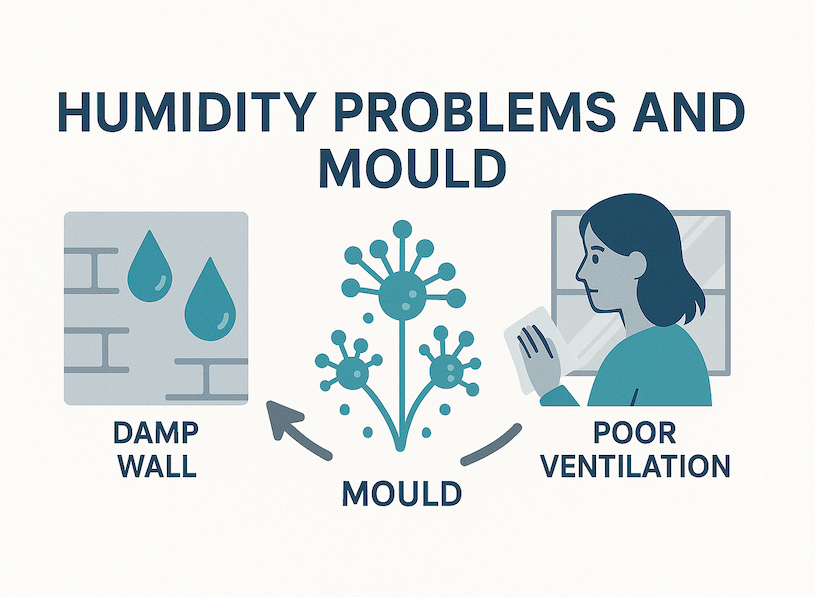
Mould Growth: Damp drywall, carpets, or insulation can quickly host mould colonies. Some moulds produce allergens or even mycotoxins that aggravate asthma, allergies, and respiratory conditions.
Musty Odours & Staining: Persistent dampness leads to odours, peeling paint, and warped wood surfaces.
Allergic & Respiratory Issues: Occupants exposed to mould and dampness often report coughing, wheezing, throat irritation, and worsening of asthma.
Building Damage: Excess humidity can weaken structural materials, corrode metal, and promote rot.
Why Offices and Homes Are Vulnerable
Sealed, Energy-Efficient Buildings: Tightly sealed spaces trap moisture indoors if ventilation isn’t properly managed.
Everyday Activities: Cooking, showering, and even breathing add litres of water vapor into the air daily.
HVAC Issues: Poorly maintained systems may recirculate moisture instead of removing it.
Solutions: How to Take Control of Humidity
Keep RH Between 30–50% ✅
Use a hygrometer to track indoor humidity.
Dehumidifiers are effective in basements and damp areas.
Ventilation is Key ✅
Install and use exhaust fans in bathrooms and kitchens that vent outside—not into the attic or wall cavity, which is against building code standards.
Consider heat recovery or energy recovery ventilators (HRVs/ERVs) for modern, airtight buildings.
Moisture Source Control ✅
Repair plumbing leaks immediately.
Ensure eavestroughs and downspouts direct water away from the foundation.
Improve grading so water drains away from the building.
Regular Maintenance ✅
Clean and maintain HVAC systems, especially drip pans and humidifiers.
Use moisture-resistant finishes in kitchens, bathrooms, and laundry areas.
Professional Help for Persistent Issues ✅
If mould is visible or suspected behind walls, hire qualified IAQ professionals.
Certified technicians can conduct moisture surveys, microbial sampling, and remediation verification.
Final Takeaway
High humidity is often overlooked until it becomes a problem—but by the time you smell musty odours or see visible mould, damage has already started. Keeping your indoor RH in the healthy range (30–50%) is one of the simplest, most effective ways to protect your health, comfort, and property.
👉 If you’re concerned about indoor humidity and air quality, Envirotrak Analytics Ltd. provides certified moisture surveys, certified indoor air quality testing, and professional reporting so you can take action before issues escalate.