
Healthy Buildings, Healthy Business: The ROI of Clean Air
Healthy Buildings, Healthy Business: The ROI of Clean Air
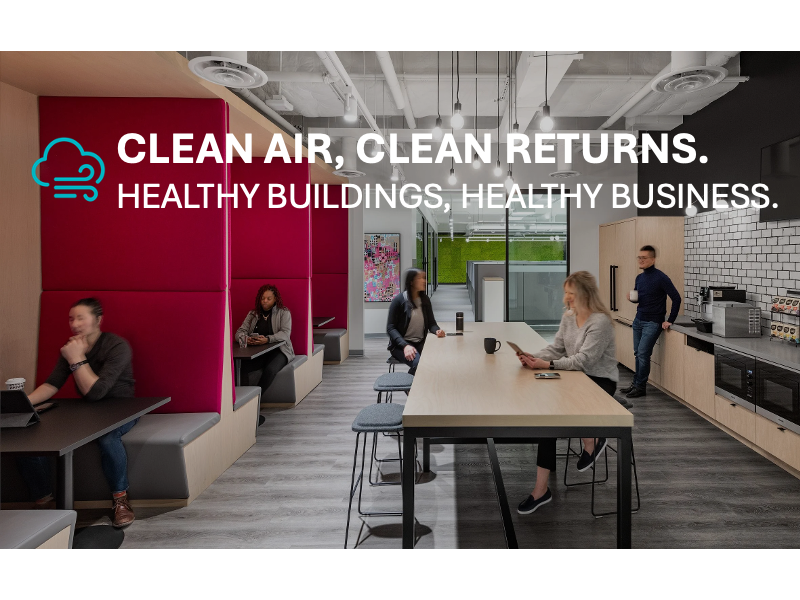
When we think about business investment, we often think of technology upgrades, employee training, or marketing initiatives. But one of the most overlooked — and most profitable — investments a business can make is improving indoor air quality (IAQ).
Recent research by the International WELL Building Institute (IWBI) has made the case crystal clear: clean air pays measurable dividends. Businesses that focus on creating healthier indoor environments see major returns in the form of improved productivity, reduced absenteeism, and higher employee satisfaction.
The Bottom Line
Investing in healthier air isn’t just a matter of compliance — it’s a strategic decision with tangible business returns. Healthier employees mean higher productivity, fewer sick days, and a workplace that people genuinely enjoy being in.
Clean air is good for people — and great for business.
Envirotrak Analytics Ltd.
Certified Indoor Air Quality Test Technicians & Certified Infrared Moisture Surveyors
Serving the Greater Toronto Area and surrounding regions.
🌐 envirotrak.ca
When we think about business investment, we often think of technology upgrades, employee training, or marketing initiatives. But one of the most overlooked — and most profitable — investments a business can make is improving indoor air quality (IAQ).
Recent research by the International WELL Building Institute (IWBI) has made the case crystal clear: clean air pays measurable dividends. Businesses that focus on creating healthier indoor environments see major returns in the form of improved productivity, reduced absenteeism, and higher employee satisfaction.
🌬️ The Hidden Economics of Air Quality
We spend nearly 90% of our time indoors, and office environments have a direct impact on how well people think, feel, and perform. Studies compiled in IWBI’s Investing in Health Pays Back (2025) report show that improving air quality, thermal comfort, and ventilation can increase employee cognitive function by up to 101% and reduce symptoms associated with “Sick Building Syndrome” by 20–50%.
The same research found that:
Higher ventilation rates can boost productivity by $6,500 – $7,500 per employee, per year.
Reducing airborne pollutants like VOCs, CO2, and fine particulates (PM2.5) improves concentration and job satisfaction.
WELL-certified buildings reported 30% higher occupant satisfaction and fewer health complaints overall.
💰 The ROI of Clean Air
When these gains are applied across an organization, the numbers are staggering. IWBI found that the net present value of improved IAQ can exceed $21,000 per employee over 10 years — purely from enhanced productivity, lower healthcare costs, and reduced turnover.
In contrast, the energy cost of better ventilation and filtration systems is minimal — often less than 1% of total operating costs. For most businesses, the real cost isn’t the investment in air quality — it’s the lost potential of not investing at all.
🏢 Healthy Air, Healthy Culture
Beyond economics, clean air fosters a stronger, healthier workplace culture. Employees in well-ventilated, low-contaminant environments report:
Fewer respiratory symptoms and headaches
Improved mood and cognitive performance
Greater engagement and retention
In today’s competitive labour market, these factors directly influence talent attraction and long-term loyalty. Healthier workplaces are increasingly becoming a differentiator in corporate sustainability and ESG reporting, aligning with modern business values that prioritize people and performance.
🔍 What Businesses Can Do
Improving indoor air quality starts with understanding what’s in the air you breathe. At Envirotrak Analytics, we help organizations across the Greater Toronto Area identify and correct air quality issues before they affect health or productivity. Our Certified Indoor Air Quality Test Technicians use calibrated instrumentation and lab analysis to measure key indicators including:
Carbon dioxide (CO2) and carbon monoxide (CO)
Volatile organic compounds (VOCs)
Particulate matter (PM2.5/ PM10)
Formaldehyde, humidity, and temperature balance
Mould spores and microbial contaminants
We also provide continuous IAQ monitoring systems using secure cellular and LoRaWAN networks, giving you real-time insights and automated alerts to keep your building’s air quality optimized year-round.
🌱 The Bottom Line
Investing in healthier air isn’t just a matter of compliance — it’s a strategic decision with tangible business returns. Healthier employees mean higher productivity, fewer sick days, and a workplace that people genuinely enjoy being in.
Clean air is good for people — and great for business.
Envirotrak Analytics Ltd.
Certified Indoor Air Quality Test Technicians & Certified Infrared Moisture Surveyors
Serving the Greater Toronto Area and surrounding regions.
🌐 envirotrak.ca
Radon Gas and Indoor Air Quality Testing in Homes and Offices
Radon Gas and Indoor Air Quality Testing in Homes and Offices
When most people think about indoor air quality (IAQ), they think about humidity, mould, or ventilation — but few realize that radon gas can be one of the most dangerous and invisible contaminants in the home or workplace.
Envirotrak’s certified technicians conduct testing under the same standards followed in Health Canada’s “Guide for Radon Measurements in Homes” (2025) and “Radon Guidance for Public Buildings” (2023).
Take Action Today!
Radon levels can vary significantly from one building to another — even within the same neighbourhood. Testing is the only way to know if you’re protected.
Book a professional Radon and IAQ assessment today at envirotrak.ca
When most people think about indoor air quality (IAQ), they think about humidity, mould, or ventilation — but few realize that radon gas can be one of the most dangerous and invisible contaminants in the home or workplace.
What is Radon Gas?
Radon is a naturally occurring, radioactive gas produced from the breakdown of uranium in soil and rock. It moves upward through the ground and can seep into buildings through cracks in foundations, sump pits, or openings around pipes. Because it is both invisible and odourless, the only way to know if your building has elevated radon levels is through testing.
According to Health Canada, long-term exposure to high levels of radon is the leading cause of lung cancer among non-smokers in Canada! The national guideline recommends taking corrective action in any building where averaged radon concentrations exceed 200 Bq/m³.
How Envirotrak Tests for Radon
At Envirotrak Analytics, we provide certified radon and indoor air quality testing services for homes, offices, and public buildings throughout the Greater Toronto Area and surrounding regions. Our testing approach aligns fully with Health Canada’s Radon Testing Guidelines (2025) and C-NRPP Quality Assurance protocols.
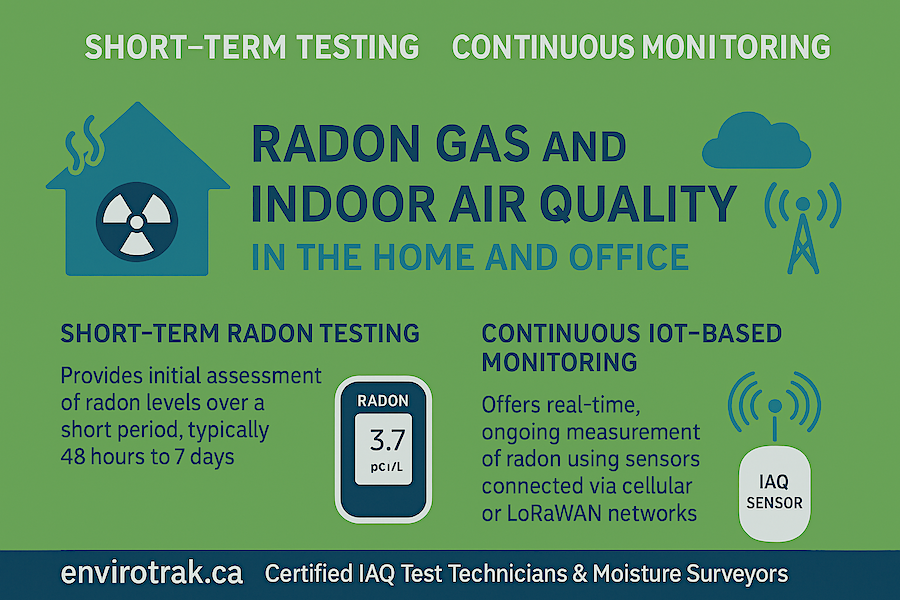
Our process typically includes two phases:
1. Short-Term Screening Test
We begin with a short-term radon test to determine whether radon levels are high enough to justify a long-term follow-up. These preliminary tests help verify if your property shows early signs of radon infiltration and can be completed within a matter of days.
If results indicate elevated radon concentrations, we then move to the second stage.
2. Long-Term Measurement or Continuous Monitoring
As per Health Canada and for more accurate results over time, we perform long-term testing using continuous electronic radon monitors (ERMs) that are C-NRPP approved and meet Canadian measurement standards. These devices log hourly data and provide detailed profiles of radon fluctuations that are averaged over time, about 91 days or more in some cases.
Envirotrak does offer continuous remote radon monitoring using cellular or LoRaWAN-enabled ERM devices — ideal for commercial buildings, property managers, or government facilities that require automated, real-time datacollection and trend reporting. This networked monitoring ensures reliable long-term verification and compliance documentation.
Why Professional Radon Testing Matters
Do-it-yourself test kits are widely available but require lab analysis, however, professional testing ensures:
Proper device calibration and placement, as required by Health Canada and C-NRPP protocols
Validated data quality and traceable accuracy
Detailed analytical reporting to guide mitigation decisions
Integration with IAQ testing for other pollutants such as CO2, VOCs, and humidity
Envirotrak’s certified technicians conduct radon gas testing under the same standards followed in Health Canada’s “Guide for Radon Measurements in Homes” (2025) and “Radon Guidance for Public Buildings” (2023).
Envirotrak’s certified technicians conduct testing under the same standards followed in Health Canada’s “Guide for Radon Measurements in Homes” (2025) and “Radon Guidance for Public Buildings” (2023).
Take Action Today!
Radon levels can vary significantly from one building to another — even within the same neighbourhood. Testing is the only way to know if you’re protected.
Envirotrak Analytics Ltd. provides:
Certified Radon Gas Testing
Short-Term and Long-Term Measurement
Continuous Cellular or LoRaWAN ERM Monitoring
Full Indoor Air Quality (IAQ) Testing and Analysis
We’re Certified Indoor Air Quality Test Technicians and Certified Infrared Moisture Surveyors, serving homeowners, offices, and public facilities across the Toronto GTA.
✅ Book a professional Radon and IAQ assessment today at envirotrak.ca
Understanding VOCs: Why Indoor Air Quality Testing Matters in Homes and Offices
Understanding VOCs: Why Indoor Air Quality Testing Matters in Homes and Offices:
Everyday materials can silently release chemicals into the air we breathe — and these volatile organic compounds (VOCs) can significantly impact our health and indoor air quality.
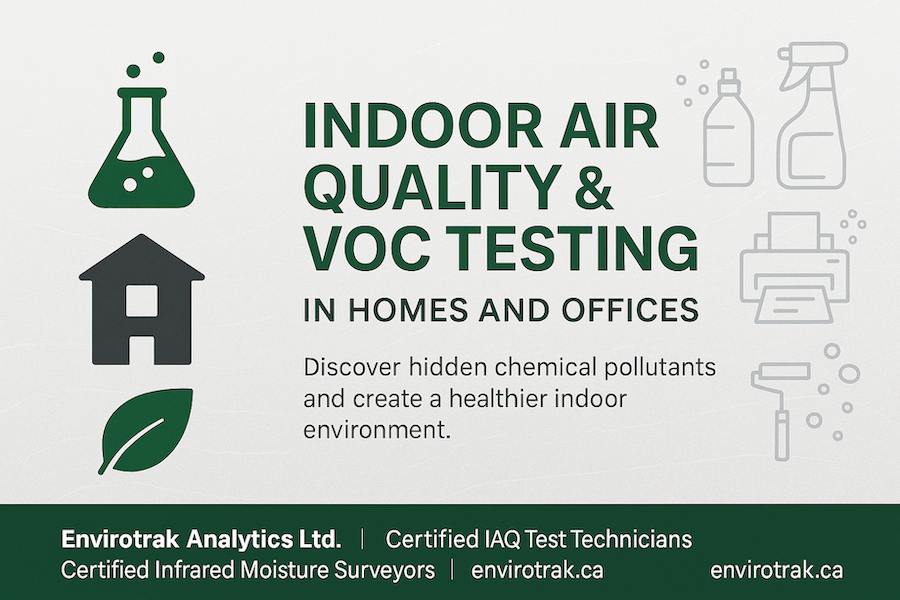
VOCs are gases emitted from certain solids and liquids, commonly found in products we use daily. Paints, cleaning agents, adhesives, carpets, furniture, office equipment, and even air fresheners can release VOCs into indoor air. Because Canadians spend close to 90% of their time indoors, exposure levels can build up far beyond outdoor concentrations, particularly in newer or tightly sealed buildings designed for energy efficiency.
Envirotrak Analytics Ltd. offers certified indoor air quality testing and VOC analysis for both residential and commercial clients. Using modern calibrated instrumentation and accredited lab testing where required, our team identifies sources of VOCs and other airborne contaminants to ensure your home or workplace meets recognized indoor air quality standards.
Whether you’re experiencing odours, headaches, or simply want peace of mind about your air quality, a VOC assessment can reveal what’s in the air you breathe and how to make it healthier.
Everyday materials can silently release chemicals into the air we breathe — and these volatile organic compounds (VOCs) can significantly impact our health and indoor air quality.
VOCs are gases emitted from certain solids and liquids, commonly found in products we use daily. Paints, cleaning agents, adhesives, carpets, furniture, office equipment, and even air fresheners can release VOCs into indoor air. Because Canadians spend close to 90% of their time indoors, exposure levels can build up far beyond outdoor concentrations, particularly in newer or tightly sealed buildings designed for energy efficiency.
Common Sources of VOCs Indoors
According to Health Canada and the U.S. Environmental Protection Agency (EPA), VOCs are released from:
Paints, varnishes, and solvents
Common building materials, e.g., laminates, plywood, fibreboard, vinyl, and furnishings
Cleaning products and disinfectants
Office printers, copiers, and adhesives
Scented products like candles and air fresheners
Stored fuels and automotive products
Even at low levels, prolonged exposure to VOCs can cause eye, nose, and throat irritation, headaches, dizziness, and nausea. Some VOCs, such as formaldehyde and benzene, are known or suspected human carcinogens.
How VOC Testing Improves Indoor Air Quality
Professional VOC testing provides measurable insight into what’s circulating in your indoor environment. Using advanced scientific sampling instruments, certified indoor air quality technicians identify both specific VOCs and total VOC concentrations (TVOCs) to help assess:
Whether levels exceed Health Canada’s or ASHRAE’s recommended limits
If building materials or furnishings are off-gassing pollutants
The impact of ventilation systems on chemical buildup
The effectiveness of remediation or filtration efforts
Results are interpreted alongside other IAQ factors — such as carbon dioxide, humidity, particulate matter, and ventilation rates — to form a complete picture of your indoor environment.
Creating a Healthier Indoor Environment
Reducing VOC exposure involves both testing and proactive management:
Increase ventilation: Open windows or improve mechanical ventilation where possible.
Choose low-emission products: Look for paints, adhesives, and furnishings labeled “low-VOC” or “no-VOC.
Avoid overuse of fragranced or aerosol products.
Maintain temperature and humidity within optimal ranges (per ASHRAE 62.1 and 62.2 standards).
Store chemicals safely and dispose of old or unused products properly.
For office environments, Health Canada’s Guidance on Improving Indoor Air Quality in Office Buildings (2025) highlights that regular air quality monitoring and HVAC maintenance are essential to minimizing VOC accumulation and protecting occupant comfort and productivity.
Professional VOC Testing in the Toronto GTA
Envirotrak Analytics Ltd. offers certified indoor air quality testing and VOC analysis for both residential and commercial clients. Using modern calibrated instrumentation and accredited lab testing where required, our team identifies sources of VOCs and other airborne contaminants to ensure your home or workplace meets recognized indoor air quality standards.
Whether you’re experiencing odours, headaches, or simply want peace of mind about your air quality, a VOC assessment can reveal what’s in the air you breathe and how to make it healthier.
Envirotrak Analytics Ltd.
Certified Indoor Air Quality Test Technicians
Certified Infrared Moisture Surveyors
📍 Serving Toronto and the Greater Toronto Area
🌐 envirotrak.ca
Why You Should Assess Indoor Air Quality During and After Construction or Renovation
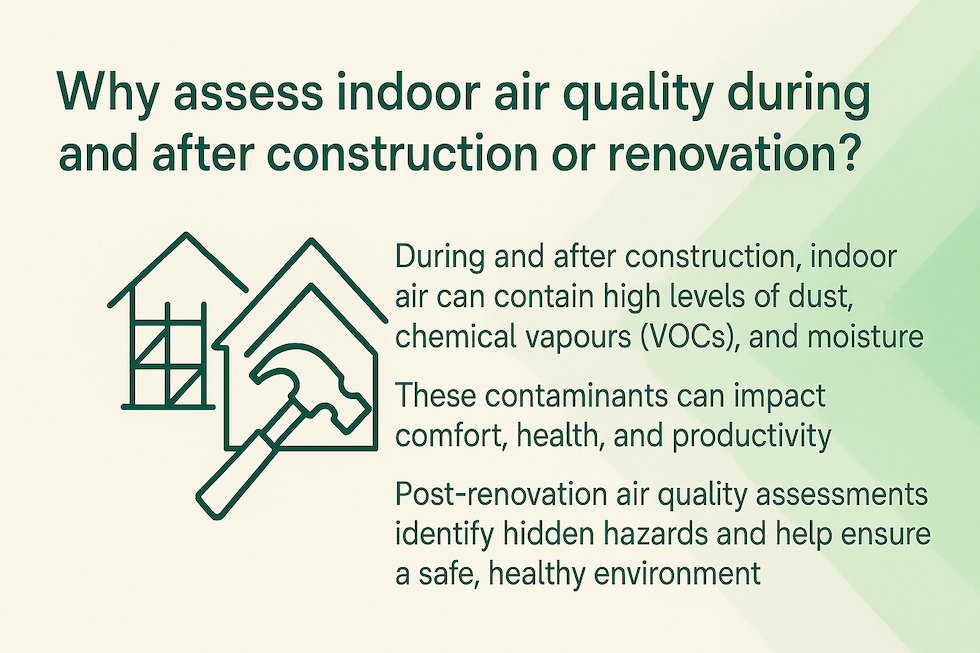
Whether you’re building a new home, upgrading an office space, or completing a major renovation, indoor air quality (IAQ) should be a top priority. During and after construction, airborne contaminants can accumulate to levels that affect health, comfort, and productivity if they’re not properly identified and controlled.
Why Testing Matters
Poor indoor air quality doesn’t just create temporary odours or discomfort. It can cause eye, nose, and throat irritation, fatigue, and respiratory symptoms — especially in people with asthma or allergies. Health Canada and ASHRAE (Standards 62.1 and 62.2) emphasize that proper ventilation and post-construction air testing are critical for maintaining healthy indoor environments.
Whether you’re building a new home, upgrading an office space, or completing a major renovation, indoor air quality (IAQ) should be a top priority. During and after construction, airborne contaminants can accumulate to levels that affect health, comfort, and productivity if they’re not properly identified and controlled.
Construction Dust and Chemical Emissions
According to Health Canada’s Guidance for Indoor Air Quality Professionals (2025), construction and renovation projects can release a variety of pollutants — including fine particulate matter (PM 2.5), formaldehyde, volatile organic compounds (VOCs), and carbon monoxide (CO).
These contaminants originate from:
New building materials such as flooring (all types), paints, sealants, adhesives, and insulation.
Dust and debris from drywall sanding, concrete cutting, demolition and Asbestos fibres from old plaster and pipe insulation removal.
Combustion byproducts from equipment and tools powered by gas or diesel.
Moisture accumulation, which can lead to mould growth if surfaces are not properly dried.
Why Testing Matters
Poor indoor air quality doesn’t just create temporary odours or discomfort. It can cause eye, nose, and throat irritation, fatigue, and respiratory symptoms — especially in people with asthma or allergies. Health Canada and ASHRAE (Standards 62.1 and 62.2) emphasize that proper ventilation and post-construction air testing are critical for maintaining healthy indoor environments.
Post-Renovation IAQ Assessment Steps
After construction or renovation, a certified Indoor Air Quality Test Technician (CIAQTT) should:
Measure airborne particulate and chemical pollutants, including VOCs, carbon monoxide, and formaldehyde.
Check ventilation performance against ASHRAE standards for airflow and filtration efficiency.
Inspect for hidden moisture or mould using infrared thermography and moisture mapping techniques.
Verify occupant safety by ensuring contaminant levels meet Health Canada exposure guidelines.
How Envirotrak Analytics Can Help
At Envirotrak Analytics Ltd., our Certified Indoor Air Quality Test Technicians and Certified Infrared Moisture Surveyors provide comprehensive IAQ assessments for homes and offices across the Toronto GTA and surrounding regions.
We use calibrated instruments and can deploy real-time monitoring to identify hidden air quality hazards and provide data-driven, action-based recommendations to ensure your space is healthy, compliant, and comfortable.
Protect your investment — and your health — by scheduling an indoor air quality assessment before moving back in.
📍 Visit envirotrak.ca to learn more or book a professional IAQ inspection.