
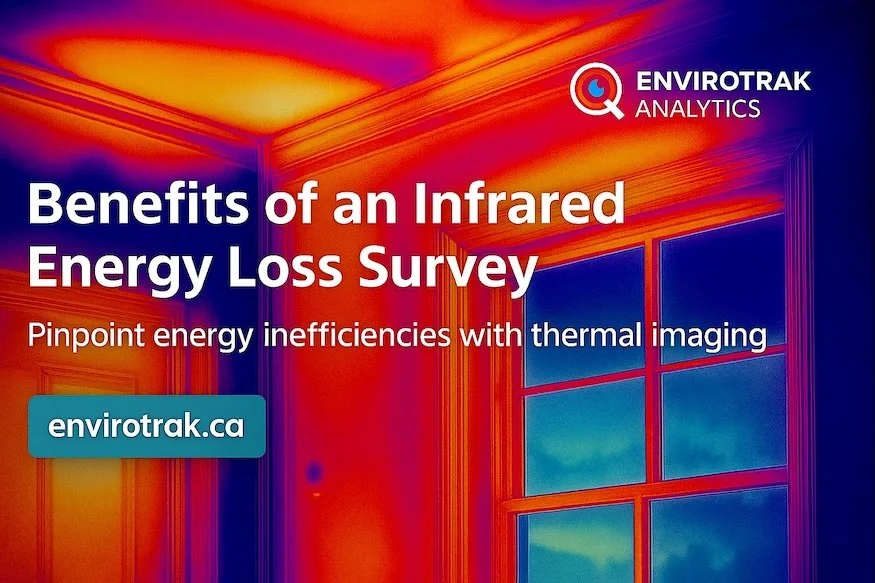
Advantages of An Infrared Energy Loss Survey for Your Home or Building
Heat Loss Is Costing You More Than You Think
Infrared Energy Loss Surveys are one of the smartest ways to uncover hidden inefficiencies in a home or commercial building. Using thermal imaging, we can pinpoint where conditioned air is escaping — long before it turns into higher utility bills or comfort complaints.
If you want to see what your building is really doing behind the walls, this is the place to start. Learn more at envirotrak.ca
Keeping your property energy-efficient isn’t just about saving money (though that’s certainly a perk). Hidden drafts, insulation gaps, and moisture intrusion can quietly undermine indoor comfort, damage building materials, and drive-up utility bills. The challenge? Most of these issues are invisible to the naked eye.
That’s where an Infrared Energy Loss Survey comes in—an advanced diagnostic service that uses thermal imaging to reveal precisely where your building is losing heat or conditioned air. At Envirotrak Analytics Ltd., we use professional-grade infrared cameras to give property owners a clear, science-backed picture of what’s happening behind the walls. Here are the key advantages:
Find Hidden Energy Loss Instantly
Infrared thermography identifies temperature differences across surfaces.
This lets us pinpoint:
Insulation gaps
Air leaks around windows, doors, and framing
Poorly sealed attic hatches
Hidden penetrations around plumbing and electrical lines
Problems that typically require guesswork—or worse, tearing open walls—are revealed quickly and non-invasively.
It’s like giving your building a pair of X-Ray goggles, but without the comic-book side effects.
Reduce Energy Bills (often significantly)
When warm indoor air escapes in winter or cool air leaks out in summer, your HVAC system has to work harder. By identifying and fixing these problem areas, owners often see measurable reductions on their monthly energy costs.
Correcting the issues highlighted during an infrared survey leads to:
Lower heating and cooling expenses
Less strain on equipment (longer lifespan)
Better building performance year-round
Improve Comfort for Occupants
Drafts, cold spots, uneven heating, and inexplicable “hot zones” aren’t mysteries—they’re symptoms. Infrared imaging shows you exactly where these comfort problems originate.
The result?
More consistent indoor temperature
Fewer complaints from tenants or family members
A quieter, more efficient HVAC system that isn’t constantly compensating
Detect Moisture Problems Before They Turn Into Big Repairs
Moisture intrusion often masquerades as energy loss. Wet insulation behaves differently under thermal imaging, making it easier to find early signs of:
Roof leaks
Foundation seepage
Window or flashing failures
Hidden condensation issues
Catching moisture early helps prevent mould growth, indoor air quality issues, and structural deterioration.
Confirm the Quality of Renovations or Upgrades
If you’ve recently upgraded insulation, windows, roofing, or HVAC systems, an infrared survey verifies that the work was done correctly—and that you’re actually getting the performance you paid for.
This is becoming increasingly popular for:
New construction
Post-renovation validation
Pre-purchase inspections
Commercial property assessments
Non-Destructive, Fast, and Ideal for Any Building Type
No drilling. No cutting holes. No shutting down operations.
Infrared surveys can be performed in homes, offices, commercial buildings, and multi-unit properties with minimal disruption. The process is relatively quick, clean, and highly informative.
Creates a Clear Roadmap for Improvements
The final report you receive from Envirotrak Analytics includes:
High-resolution thermal images
A detailed explanation of each identified issue
Specific recommendations for corrective action
Prioritized items based on energy impact and urgency
This turns guesswork into a smart, actionable plan.
Why Choose Envirotrak Analytics?
Envirotrak Analytics is equipped with professional-grade infrared imaging technology—including the FLIR E-Series platforms—paired with certified expertise in building diagnostics and indoor environmental health.
As Certified Infrared Moisture Surveyors and Certified Indoor Air Quality Test Technicians, we don’t just spot heat loss—we interpret what it means for the entire building system.
Final Thoughts
An Infrared Energy Loss Survey is one of the most cost-effective tools available for improving energy efficiency, comfort, and building performance. Whether you’re addressing high utility bills, preparing for upgrades, or simply trying to understand what’s happening inside your walls, thermal imaging provides clarity without the demolition.
If you’re in the Toronto GTA region and want to identify a building’s hidden inefficiencies Envirotrak Analytics can help. Visit envirotrak.ca to learn more or book your survey.
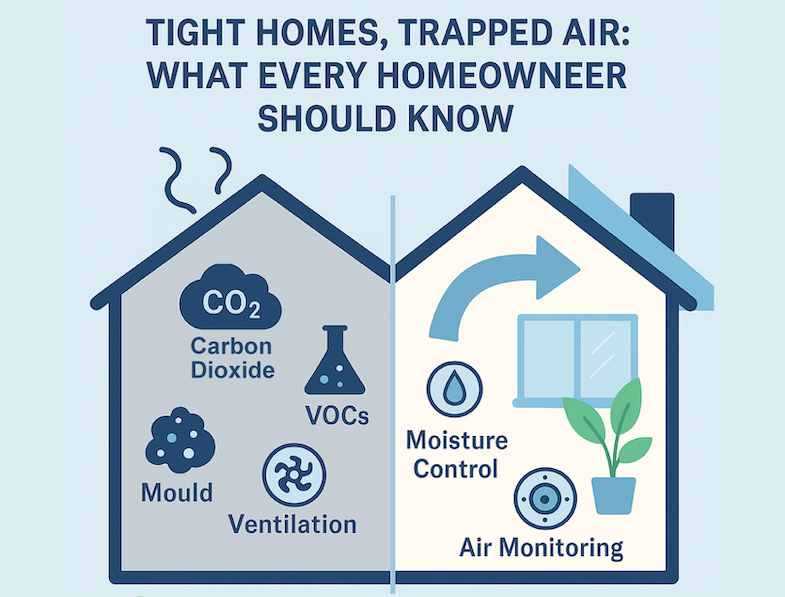
Sealed In and Stuffy: The Hidden Air Problems of Tight Homes
Sealed In and Stuffy: The Hidden Air Problems of Tight Homes.
Energy efficiency has become the gold standard in modern home design. Builders and homeowners alike are sealing up cracks, upgrading insulation, and installing high-performance windows to lock in comfort and lock out wasted energy. On paper, it’s a win for both your wallet and the environment.
But here’s the twist: a home can actually be too efficient. When your house is sealed too tightly, you may end up trading lower utility bills for stale, unhealthy air.
When Fresh Air Can’t Get In
Older homes were drafty by design. Gaps around doors, windows, and walls may have wasted energy, but they also let in a steady supply of outdoor air. In today’s “tight” homes, natural ventilation is limited, and that can mean trouble.
Without enough fresh air, indoor pollutants build up quickly:
Carbon dioxide (CO₂) from everyday breathing leaves the air feeling stuffy and heavy.
Volatile Organic Compounds (VOCs), released from paints, furniture, and cleaners, linger longer and in higher concentrations.
Moisture and mould thrive in sealed spaces with poor airflow.
Dust, pet dander, and allergens circulate endlessly without proper filtration.
Radon gas, a natural radioactive gas that seeps in from the ground, can accumulate to unsafe levels, which can cause severe health issues.
The result? A home that looks spotless and efficient from the outside but feels stale and sometimes even unhealthy on the inside.
How It Affects You and Your Family
Poor indoor air quality doesn’t always show up as an obvious problem. Instead, it sneaks into your daily life: the morning headaches, the mid-afternoon fatigue, or the worsening of allergies and asthma. Over time, these exposures may increase risks for more serious health issues like cardiovascular disease or chronic respiratory problems.
As Health Canada and ASHRAE (leading indoor air quality standard-setting body) both remind us: efficiency should never come at the expense of breathable, healthy indoor air.
Striking the Right Balance
The good news? You don’t need to choose between efficiency and fresh air—you can have both. Here’s how:
Bring in fresh air, the smart way. Heat Recovery Ventilators (HRVs) and Energy Recovery Ventilators (ERVs) let outdoor air in while conserving energy.
Control moisture. Keep humidity between 30–50% to discourage mould while maintaining comfort.
Filter what you can’t see. Upgrade to a higher-efficiency furnace filter (MERV 13 if possible) or add portable HEPA purifiers in bedrooms and living areas.
Test and monitor. A radon test kit is a must for every Canadian home. Indoor air sensors can also track humidity, CO₂, and pollutant levels in real time.
Be mindful of pollutants. Store paints and solvents in the garage, choose low-emission furniture and finishes, and have appliances serviced regularly.
Breathe Easy in Your Tight Home
A tightly sealed home doesn’t have to mean poor air quality. With the right ventilation and clean-air practices, you can enjoy both lower energy bills and a healthier living space.
At Envirotrak Analytics Ltd., we help homeowners identify, monitor, and solve indoor air quality challenges—so your home can be both energy-smart and safe for every breath you take.